

Technical insight
24V Truck Starting Battery Selection for Cold-Chain Fleets
Choose a 24V truck starting battery by cranking demand, parking loads, temperature, charging, installation and fleet validation—not CCA alone in service.
A 24V truck starting battery for cold-chain or long-haul service must be selected as part of the vehicle’s complete electrical system. Cranking current matters, but so do overnight parking loads, refrigeration architecture, low-temperature charging, cable length, battery-box space and the cost of a missed dispatch.
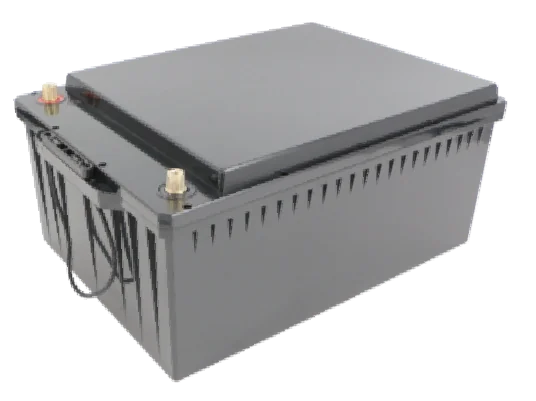
The NaVolt LR-N100-24V provides a current reference at 24 V, 100 Ah and 2,000 A CCA. It is a truck starting platform—not an automatic answer for every 24 V vehicle.
LR-N100-24V reference specification
| Field | LR-N100-24V value |
|---|---|
| Chemistry | Sodium-ion |
| Nominal voltage | 24 V |
| Voltage range | 12–31.6 V |
| Rated capacity | 100 Ah |
| CCA | 2,000 A |
| Dimensions | 524 × 365 × 233 mm, L × W × H |
| Weight | 30 ±1 kg |
| Protection | IP67 listed on approved product sheet |
| Operating temperature | -40°C to 70°C listed on approved product sheet |
| Start-stop operations | >100,000 listed platform claim |
| Cycle count | >3,000 listed platform claim |
Cycle and start-stop figures are useful screening data, but fleet-life estimates still require the test method, temperature, depth of discharge and end-of-life criterion.
Separate cranking power from parked energy
Cold-chain trucks often have refrigeration controls, telematics, lighting, liftgates or cabin systems. Determine which loads are supplied by the starter battery and which use a separate auxiliary or refrigeration power source.
Use a load schedule:
| Vehicle state | Loads active | Current | Duration | Battery source |
|---|---|---|---|---|
| Parked overnight | Telematics, alarms, monitoring | Measure | Hours | Starting or auxiliary |
| Pre-trip | Controls, heaters, pumps | Measure | Minutes | Defined system |
| Engine crank | Starter and control systems | Capture trace | Seconds | Starting battery |
| Loading stop | Lights, liftgate, refrigeration controls | Measure | Minutes | Defined system |
| Driving | Charging plus active loads | Measure | Route | Alternator/DC-DC |
Without this separation, a high CCA battery may be blamed for an energy deficit created by parked loads.
Define the cold-start requirement
Write down the engine, oil grade, minimum battery temperature, required test standard and minimum voltage. SAE J537 is one reference used for automotive storage-battery testing, but fleets and vehicle manufacturers may specify other methods.
For a vehicle test, capture:
- battery and ambient temperature;
- state of charge before cold soak;
- crank current and duration;
- minimum terminal voltage;
- engine speed and start result;
- cable voltage drop;
- charge recovery after start.
One successful engine start is a useful observation, not a full release record.
Battery-box and cable design
The LR-N100 measures 524 × 365 × 233 mm in L × W × H order. Confirm the battery box, restraint, access, drainage, cable entry and service clearance using the production sample.
Heavy-duty cranking makes connection resistance especially important. Review:
- cable size and total path length;
- lug material, plating and contact area;
- connection torque and locking method;
- positive-terminal insulation;
- chassis ground path;
- voltage drop at full crank;
- vibration restraint and post-service inspection.
Do not approve the installation from battery-box dimensions alone.
Charging after a cold start
Measure the vehicle’s 24 V charging system through idle, elevated speed, loaded operation and cold restart. Confirm how the regulator, battery sensor or DC-DC system responds to low temperature and state of charge.
The LR-N100 approved sheet lists a broad voltage range, but that is not a substitute for an approved charge procedure. Engineering should define maximum voltage, current, temperature controls and fault behaviour for the target vehicle.
Why cold-chain fleets need route-level validation
Cold-chain duty can combine low ambient temperature with frequent loading stops and strict delivery windows. The commercial cost of failure may include spoiled cargo, missed time slots, recovery vehicles and driver hours.
Select a representative route, not the easiest route. A useful pilot includes:
- vehicles parked outdoors at the coldest depot;
- the longest parking interval;
- high-frequency urban stops;
- representative refrigeration and telematics loads;
- both cold start and hot restart;
- maintenance teams at more than one location.
Use the current AGM or lead-acid fleet record as the baseline. Compare no-starts, callouts, installation time, diagnostic issues and removal causes.
Fleet validation gates
Gate 1: Specification match
Confirm 24 V architecture, required capacity and CCA, battery-box size and operating temperature.
Gate 2: Installation release
Approve the restraint, cables, protection and service procedure.
Gate 3: Electrical release
Verify crank performance, charging, parked load, sleep/wake and diagnostic behaviour.
Gate 4: Route pilot
Run enough vehicles and time to include representative weather and duty.
Gate 5: Commercial release
Define traceability, spare-stock policy, installer training, failure analysis and warranty handling before scaling.
RFQ data for a 24 V truck programme
- Truck make, model, year and engine
- Existing battery arrangement and model labels
- Required CCA standard and rating
- Battery-box dimensions and photographs
- Cable drawing and connection type
- Alternator/DC-DC voltage and current profile
- Minimum ambient and battery temperature
- Parked loads and maximum parking time
- Refrigeration power architecture
- Route, starts per day and annual kilometres
- Fleet size, sample plan and destination market
Frequently asked questions
Can two 12 V batteries replace one 24 V truck battery?
Only under an engineered series design that covers matching, balancing, BMS behaviour, connections, charging and service. Do not assume two independent 12 V products equal an approved 24 V pack.
Is 2,000 A CCA enough for every truck?
No. The engine, temperature, test standard, cable system and minimum voltage determine the requirement. CCA is an important filter, not universal approval.
Can the starter battery power refrigeration overnight?
That depends on the vehicle architecture and energy calculation. Many fleets separate starting reserve from auxiliary or refrigeration energy. Define the loads before selecting the battery.
What is the most important cold-chain pilot metric?
Start reliability is essential, but also track parked state of charge, callouts, missed dispatches, charging behaviour and the confirmed root cause of every removal.
Conclusion
The right 24V truck starting battery protects dispatch reliability, not just a CCA target. Match the LR-N100-24V or another candidate against the engine, battery box, parked loads, charging system and representative route before fleet release.
Review the LR-N100-24V product page or request a truck fleet engineering review.
Sources
- SAE International, J537_202309: Storage Batteries.
- NaVolt LR-N100-24V Approved Product Sheet, current revision.
- NaVolt start-stop and starter-battery product material, current controlled version.